
The Beauty of Power: Photographing Alberta's Oil & Gas Industry

Updated: Jul 10
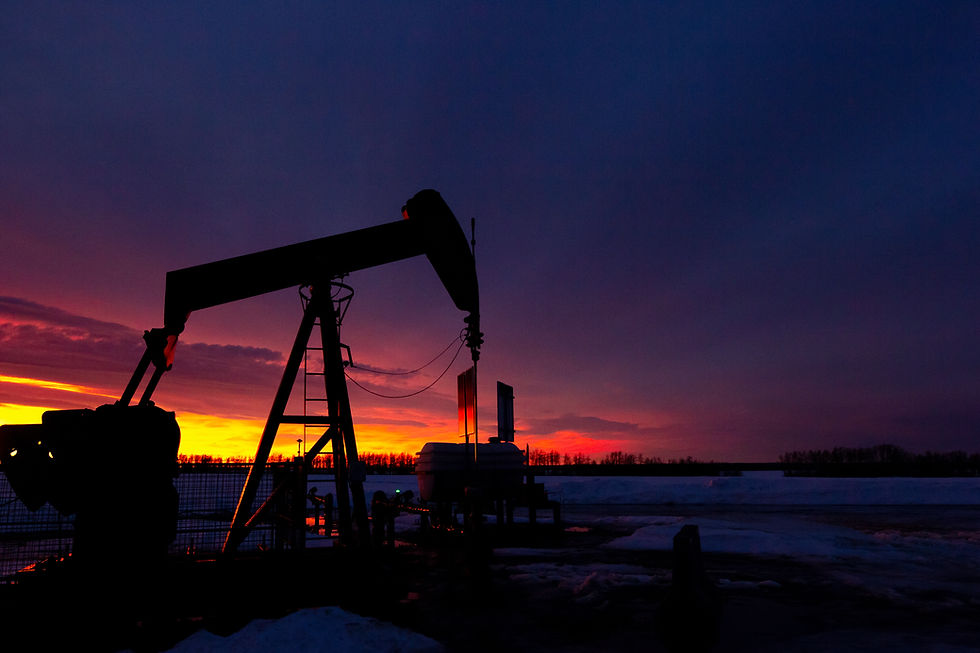
There's a moment right at dusk when a pump jack starts to look less like machinery and more like sculpture. The sky goes orange and pink behind it, the steel silhouette starts nodding slow and steady like it's keeping time with something older than the rig itself, and I can't help but grab my camera. This is what I love photographing most — the quiet power of Alberta's oil and gas industry, right alongside the fields and farms it sits beside.
Here's why this industry is more fascinating — and more photogenic — than people often realize..
A Province Built on What's Underground
Alberta's story as an energy powerhouse didn't start yesterday. It goes back to 1914, when the province's first major oil field was discovered at Turner Valley. But the real turning point came in 1947, when a well near Leduc struck oil and transformed Canada almost overnight from a country that imported oil to one that exported it around the world.
More than a century later, that legacy is still running strong beneath our feet. The Athabasca, Peace River, and Cold Lake oil sands — much of it within a few hours of where I live and shoot — hold an estimated 165 billion barrels of recoverable oil, ranking among the largest oil reserves on the planet.
The Numbers Are Bigger Than You'd Think
A few facts that surprised even me:
Alberta's oil and gas sector contributed close to $88 billion to the province's GDP in a single recent year — about a quarter of Alberta's entire economic output.
The industry supports more than 500,000 jobs, direct and indirect, across the province.
Alberta produces the majority of Canada's total oil and gas output, and remains the country's largest exporter of both.
Since the 1950s, Alberta's oil and gas royalties have paid hundreds of billions of dollars into public programs — money that's gone toward hospitals, schools, and infrastructure across the country.
This isn't a background industry. It's the engine running underneath rural life here, including in Saddle Hills County where I live and the wider Peace Country.
Why It's So Striking Through a Lens
Photographers are drawn to contrast, scale, and light — and this industry has all three in abundance.
Scale. A drilling rig against an open prairie sky makes you feel how small you are and how enormous the machinery of energy really is. There's nothing quite like standing at the base of one to understand its true size.
Light and fire. Flare stacks burning off gas at dusk create a kind of glow you can't fake in a studio — a controlled flame against a darkening sky, often paired with the last streaks of a prairie sunset. It's one of the few places where industry and natural beauty share the same frame.
Texture and geometry. Pipelines stretching in perfectly straight lines across a canola field. The mechanical rhythm of a pump jack. Steam rising from a processing facility in the cold morning air. These are shapes and patterns you don't find anywhere else — industrial precision set against the organic curves of the land.
Human story. Behind every rig and lease site are real people — roughnecks, engineers, service rig crews — many of them neighbors, many of them the backbone of small communities like ours. Photographing this industry means photographing the people who keep rural Alberta running, not just the steel.
Where Farming Meets Fuel
What I find most compelling, living where I do, is how naturally agriculture and energy sit side by side here. A canola field with a pump jack quietly working in the corner. A grain truck rolling past a lease road. A sunset that doesn't care whether it's lighting up a combine or a drilling rig — it just makes both of them glow.
That overlap is part of what makes rural Alberta's landscape so unique, and it's exactly what I try to capture: not oil and gas as an abstract industry, but as a real, working part of the land I call home.
Interested in industrial or agricultural photography for your operation, or just want to see more of this work? Contact me: arichard.wildnorthphotography@gmail.com I'd love to help tell your story.
Sources:
Canada Action, Oil & Gas in Alberta: 25 Facts, History & More
Alberta.ca, About Oil
CAPP, Alberta Oil and Natural Gas Overview, April 2026
Comments